

WHERE CAN GERMAN TAKE YOU?

From the classroom to university, career & life abroad
Learning German can start with something as simple as a first Hallo, a new vocabulary word or a favorite German story.
But over time, it can become something much bigger.
For children and teenagers especially, learning German isn't only about today's class. It can influence where they study, where they work and even where they choose to live one day.
That is why I see learning German as more than another subject on a school schedule. It's an opportunity to give students more choices for their future.
WHAT IF GERMAN COULD CHANGE WHERE YOU STUDY?

One thing many international families don't realize is just how affordable studying in Germany can be.
At many German public universities, bachelor's and many master's programs charge little to no tuition, including for many international students. Students usually pay a semester contribution instead, although there are exceptions depending on the state, university and program.
For example, Baden-Württemberg generally charges non-EU international students €1,500 per semester at its state universities. Private universities and some specialized programs can also charge tuition.
So no, university in Germany isn't always completely “free.” But compared with university tuition in countries such as the United States, the possibilities can be remarkable.
And German matters.
While there are English-language degree programs, many undergraduate programs are taught in German and require students to demonstrate German proficiency.
A student who has already spent years progressing through German doesn't have to suddenly begin learning the language when university applications arrive.
Learn today. Study abroad tomorrow.
DAAD — Costs of Studying in Germany
WHAT IF GERMAN COULD CHANGE WHERE YOU LIVE?
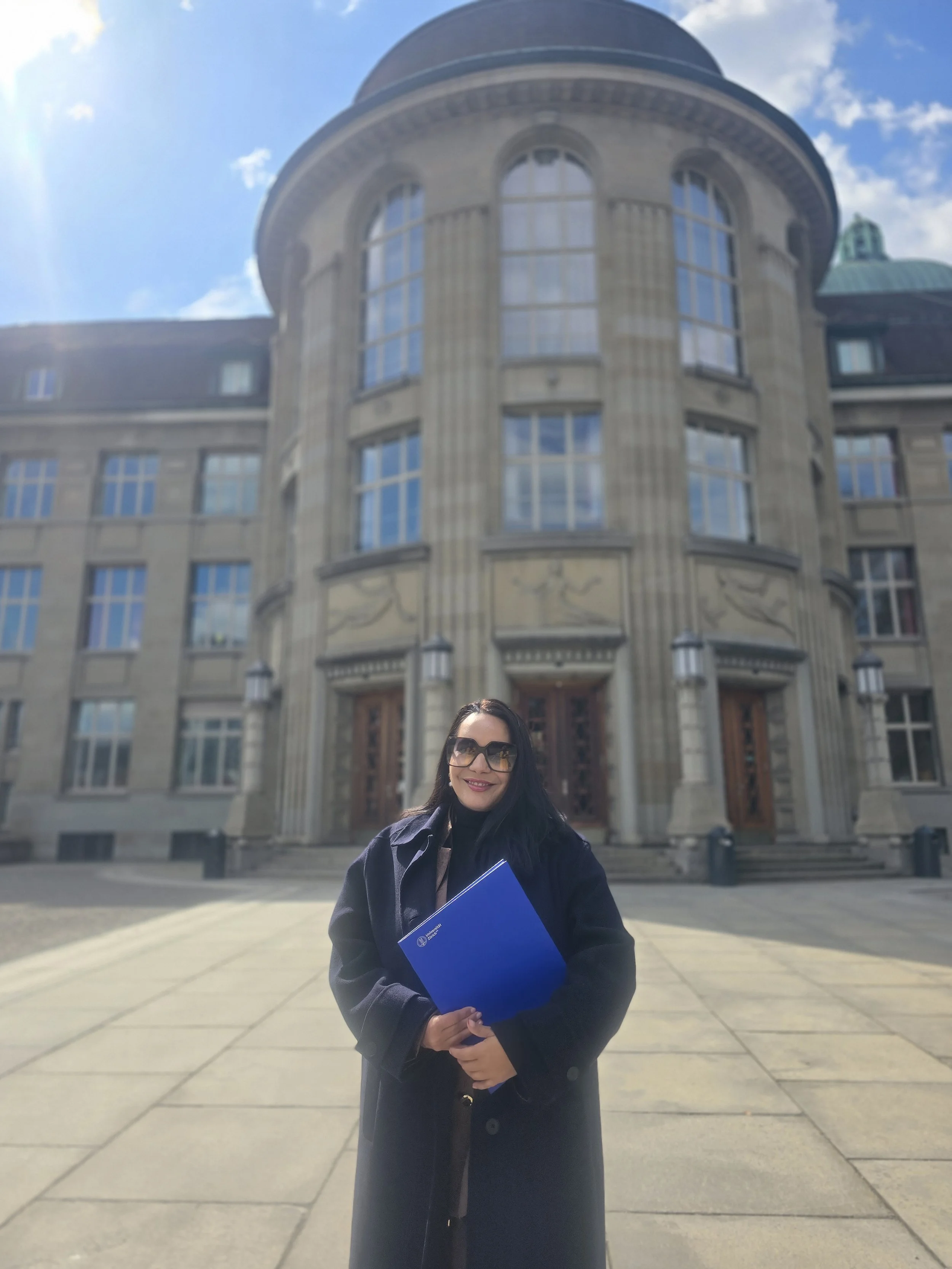
Switzerland is known for being expensive. What many families don't realize is that its public universities can have surprisingly reasonable tuition.
And this part is personal to me because the University of Zurich is where I studied, too.
UZH — University of Zurich
Regular tuition at UZH is currently CHF 720 per semester, plus mandatory semester contributions. Bachelor's students with foreign educational backgrounds may also pay an additional CHF 500 surcharge.
For a bachelor's student subject to that surcharge, university and mandatory semester fees are approximately CHF 1,279 per semester.
German is particularly important here: bachelor's programs at UZH are generally taught primarily in German, and students who need to provide proof of German proficiency may be required to demonstrate C1 level.
For a student who has been building German gradually for years, that's a very different situation from discovering the requirement shortly before applying.
University of Zurich — Tuition & Fees
University of Zurich — Language Requirements
ETH Zürich

Then there is ETH Zürich, one of the world's leading universities for science and technology.
Standard tuition is currently CHF 730 per semester. Many international students who don't qualify for the standard rate pay CHF 2,190 per semester.
For an institution of ETH's international standing, those numbers may surprise families accustomed to seeing elite university tuition measured in tens of thousands per year.
The exact tuition category depends on an individual student's circumstances, so prospective students should always check ETH's current requirements before applying.
University of St. Gallen — HSG

For students interested in business, economics, finance, law or international affairs, the University of St. Gallen is another exciting option.
From autumn 2026, tuition for international students is approximately:
Bachelor: CHF 3,343.50 per semester
Master: CHF 3,557.50 per semester
Again, Switzerland may not immediately come to mind when families think about affordable university options, particularly because everyday living costs here are high. But tuition and cost of living are two different things.
University of St. Gallen — Costs of an HSG Degree
Of course, tuition isn't the whole financial picture. Housing, food, health insurance, transportation, books and everyday expenses need to be considered, and Switzerland has a particularly high cost of living.
Admission, visa and language requirements also vary according to university, degree program and the student's individual circumstances.
But there is an important distinction:
An expensive country doesn't necessarily mean an unaffordable university education.
And German can help turn Switzerland from somewhere you visit into somewhere you could potentially study, work and live.
GERMAN CAN TRAVEL WITH YOUR CAREER
German doesn't stop being useful after graduation.
German-speaking Europe offers opportunities across business, finance, hospitality, education, technology and international careers.
And for someone who eventually wants to build a career in Germany, Switzerland or Austria, speaking German offers something that goes beyond another line on a CV.
It means being able to communicate confidently, build relationships and participate in the culture around you.
We may not know exactly where a child's future career will take them.
That's precisely why another language can be so valuable.
Another language. More doors.
WHY START YOUNG?

German proficiency takes time.
A1 → A2 → B1 → B2 → C1 → C2
A student shouldn't discover at 17 that their dream university requires advanced German and then have to race to learn years' worth of language.
Starting earlier allows the language to grow with them.
First vocabulary. Then conversation. Reading and writing. More sophisticated grammar. Academic German. And eventually, if they choose, an official certification.
There doesn't need to be pressure to know the final destination at age 8, 10 or 13.
The point isn't deciding a child's entire future today.
It's giving them the possibility of choosing it later.
Starting early means building confidence gradually — and having more choices later.
TODAY IT'S A GERMAN CLASS. TOMORROW? A BRIGHTER FUTURE
Maybe it's a university in Germany.
Maybe it's studying at UZH, ETH Zürich or St. Gallen.
Maybe it's an international career.
Maybe it's building a life somewhere they haven't even imagined yet.
We can't predict exactly where learning German will take a student.
But we can give them the language to open the door when they get there.
Study abroad. Build a career. Live somewhere new.
GERMAN THAT OPENS DOORS

Csilla Language Lab
A1–C2 German Preparation | Based in Switzerland. Teaching worldwide.
University tuition, admission and language requirements can change and vary by program and applicant. Always check the university's official admissions information for the most current requirements.
