
Vocabulary You Actually Use (Not Textbook Words)

If you have ever opened a traditional language textbook, you probably learned words that sound correct but rarely appear in real conversations.
You memorize long lists of vocabulary, practice perfect grammar structures, and complete exercises that feel academic and structured. But the moment you actually find yourself in a German speaking city like Zurich, Berlin, or Munich, the language suddenly sounds completely different.
People speak faster.
Sentences are shorter.
And the vocabulary is far more casual.
This is the difference between textbook German and real German.
Language in real life is not built around perfect grammar structures. It is built around quick reactions, small phrases, and everyday expressions that carry entire meanings in just a few words.
Four Words You Will Hear Everywhere
These are the kinds of expressions you hear constantly in everyday German conversations.
Passt schon
This means something like “it’s fine” or “don’t worry about it.”
You hear it in shops, restaurants, and casual conversations.
Genau
This word means “exactly,” but it is used constantly as a reaction when someone agrees with you.
Mal schauen
Literally it means “let’s see,” but in everyday speech it usually means “maybe” or “we’ll see.”
Alles gut
A very common phrase that simply means “all good.” People use it to reassure someone or to show everything is fine. These are the kinds of words that actually make conversations flow naturally.
A Personal Note
Even though I do teach grammar, it is honestly my least favorite part of language education.
Grammar has its place, but language is not meant to live inside rules and exercises. It lives in conversations, reactions, and real moments.
That is why my classes feel very different from traditional language lessons. I like to keep things lively, energetic, and connected to real life. We use expressions people actually say. Sometimes even slang. We talk about everyday situations instead of repeating rigid textbook dialogues.
Students are not just memorizing structures. They are learning how people actually communicate.
And that is exactly why my students love my classes.

Language Should Feel Alive
If you want to truly understand a language, you have to move beyond the textbook.
Listen to how people speak.
Notice the small phrases they repeat.
Pay attention to the rhythm of conversations.
Those details are what make a language feel real.
Yes, I am not your average language teacher.
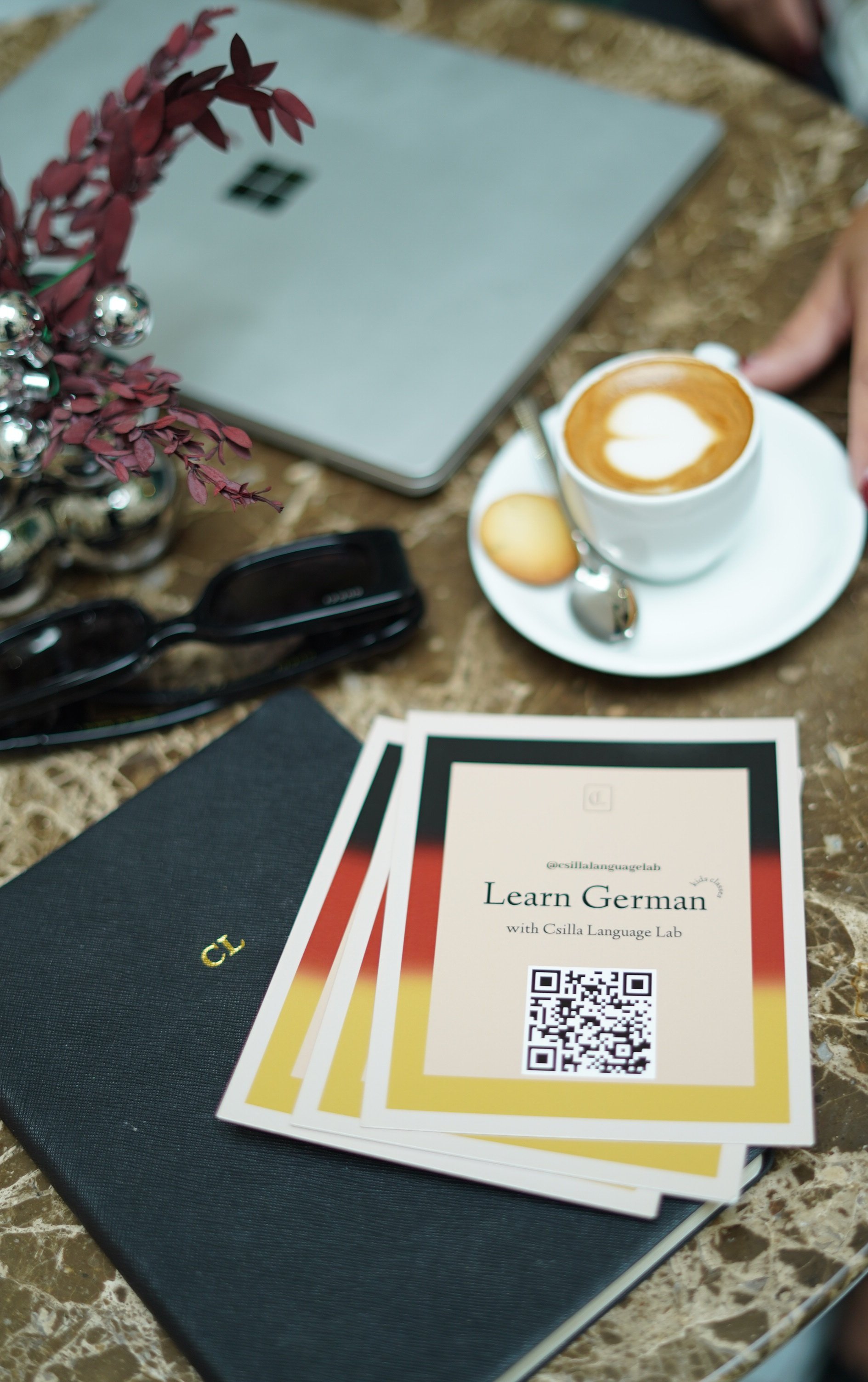
But that is exactly why I love what I do. I make language education cool, modern, and connected to the real world. Sometimes that means teaching with an espresso in hand, working from a coffee shop or a luxury hotel lobby somewhere in the world.
Because language is something you live, not just something you study.
And once you start learning a language this way, you will never want to go back to the textbook version again.
