

The Swiss School System, Explained (For Parents Who Feel Completely Lost)

There’s a moment every expat parent has.
It usually comes sometime after the move, once the boxes are unpacked, the excitement settles, and reality quietly steps in.
You start asking simple questions.
When does school actually start?
Why is everyone talking about different levels?
And why does it feel like everyone understands the system except me?
The Swiss school system is often praised. It is efficient, structured, and successful. And it is.
But what no one tells you is that it is also complex, early deciding, and deeply cultural.
If you did not grow up in it, it can feel like trying to read between lines that were never explained to you in the first place.
So let’s break it down simply, honestly, and without the institutional language.
It Starts Later Than You Think
In Switzerland, formal schooling does not begin as early as in many other countries.
Kindergarten usually starts around age four, but it is not what many expat parents expect.
It is less academic and more social. Less structured and more observational.
Children are expected to
develop independence
integrate socially
adapt to group dynamics.
There is no pressure to read early. No race to academic milestones.
For many expat families, especially those coming from the US, this can feel unsettling.
It raises a quiet question.
Is my child falling behind?
The answer is no.
The system is simply preparing them for something different.
Independence Is Not Encouraged, It Is Expected

This is one of the biggest cultural shifts.
In Switzerland, children are trusted with responsibility early.
They walk to school alone.
They manage their schedules.
They are expected to figure things out.
It is not framed as exceptional.
It is the baseline.
For expat parents, this can feel uncomfortable at first.
In the US, independence is often encouraged.
In Switzerland, it is simply assumed.
And schools reflect that expectation.
The Part No One Explains Properly, Early Tracking
This is the moment where most expat parents pause.
Around the age of twelve, children are placed into different academic tracks.
These tracks determine
the level of academic rigor
the type of secondary school
and often the long-term educational path.
Not all roads lead to university, and that is intentional.
The Swiss system values vocational training, apprenticeships, and specialized career paths.
Success is not defined in one single way.
For parents unfamiliar with this structure, it can feel like
a very early decision with very real consequences.
The hardest part is that it is not always clearly explained upfront.
Language Is Not a Subject, It Is the System

For expat children, this is where things become real.
Swiss public schools operate in the local language, German, French, or Italian depending on the region.
Language is not treated as a separate subject.
It is the classroom.
It is the instructions.
It is the social environment.
It is the entire learning experience.
This means that even highly capable children can struggle, not because they do not understand the material, but because they do not yet have the language to access it.
This is where many families begin to feel the gap.
So, Is It a Good System?
Yes.
But that is not the right question.
The better question is
Is it the right system for your child?
The Swiss education system is structured, efficient, and designed for long term stability.
It also requires early adaptation, language integration, and emotional resilience.
Some children thrive in it.
Others need more time, more support, or a different approach.
A Personal Note
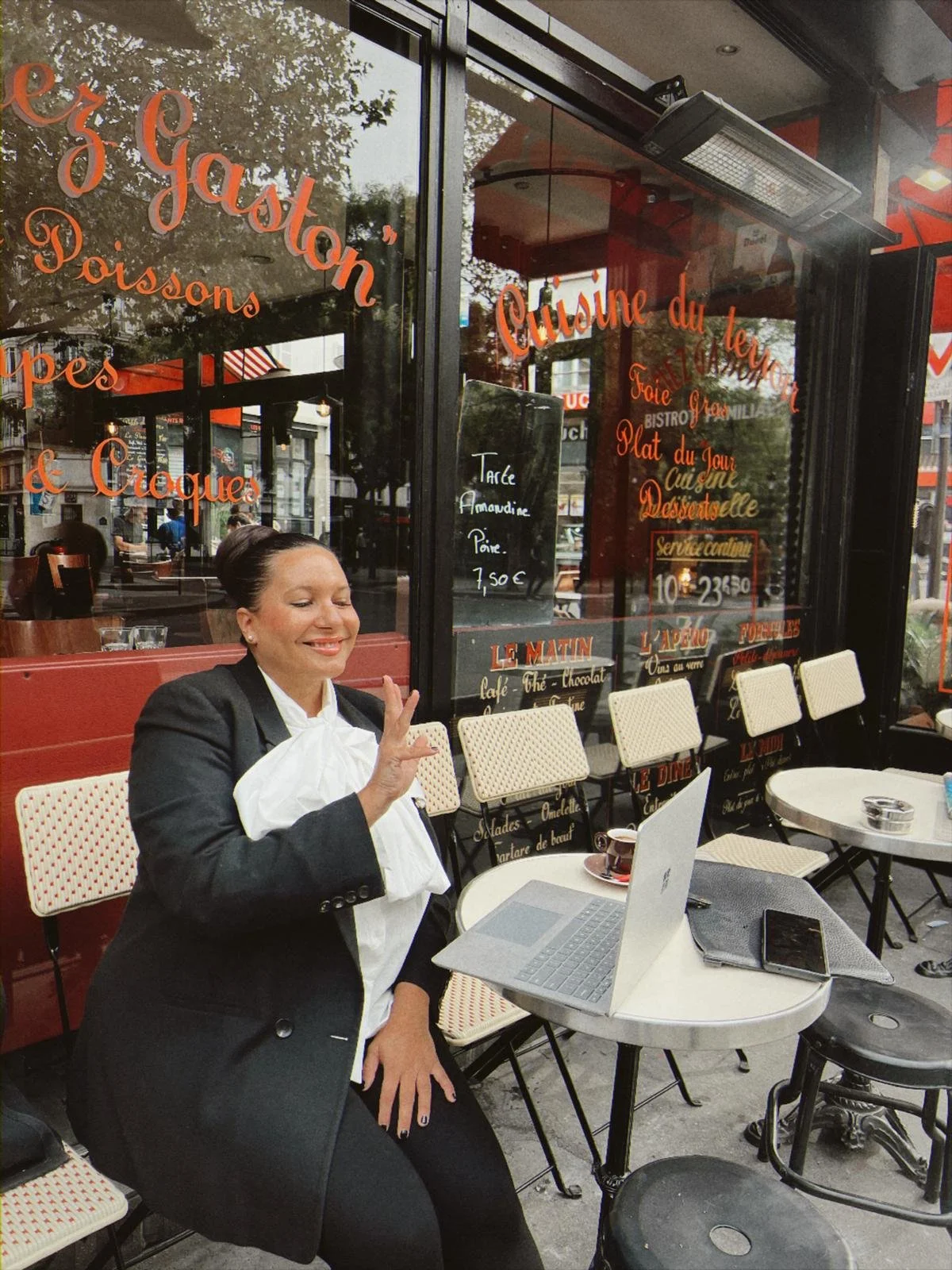
I was born and raised in Switzerland.
I went through the entire system, from daycare to Gymi, and eventually completed my Master’s at the University of Zurich. On paper, it looks like a perfect success story.
In reality, it was not a straight line.
I never felt deeply connected to my teachers. I often felt like the system was designed to measure you rather than understand you, to correct you rather than elevate you.
I grew up with Eastern European parents who are both highly educated. They came to Switzerland and built their lives through discipline, hard work, and education. For them, it was never a question whether their children would succeed academically. It was an expectation.
And I carried that expectation.
But I was always different. I was an artist, a performer. That was the part of me that felt natural, alive, and effortless.
School, on the other hand, often felt like pressure.
Even though I made it into Gymi, I eventually chose to leave that path and go to New York to pursue a dance career.
Later, I returned to education and pursued my Bachelor’s degree in the US.
That is when everything changed.
For the first time, academics became inspiring. It became a place I loved. A place where I felt understood.
The system itself was not necessarily easier. But it was different. It allowed space for creativity, individuality, and expression.
And that made all the difference.
Eventually, I returned to Switzerland to complete my Master’s. That moment felt like a full circle.
As a child, I never imagined I would pursue higher education in my home country.
And yet, here I was.
This time, I appreciated the system more. I understood it more. But I still felt its limitations. The structure. The pressure. The lack of emotional connection in many classrooms.
And that is exactly why I do what I do today.
Without those experiences, I would not have become the educator I am now.
What Most Expat Parents Actually Need
It goes deeper than information.
They need guidance from someone who understands the system from the inside
and from the outside.
Someone international.
Someone who sees both the Swiss structure and the global context.
Someone who understands what it means to grow up between languages, cultures, and identities.
Someone like me.
And that is why being an educator is my purpose in life,
to support children in ways I never experienced myself in Switzerland.
Final Thoughts

The Swiss school system works.
But it works best for those who understand how to navigate it.
And that’s exactly where the difference is made
not in the system itself,
but in how you move through it.
When you understand it,
you stop feeling lost
and start making the right decisions.
If you’re feeling lost,
you can always reach out
and we’ll navigate it together.
