

How to Support Bilingual Children During Summer Break
4 Simple Ways to Keep a Language Alive All Summer Long
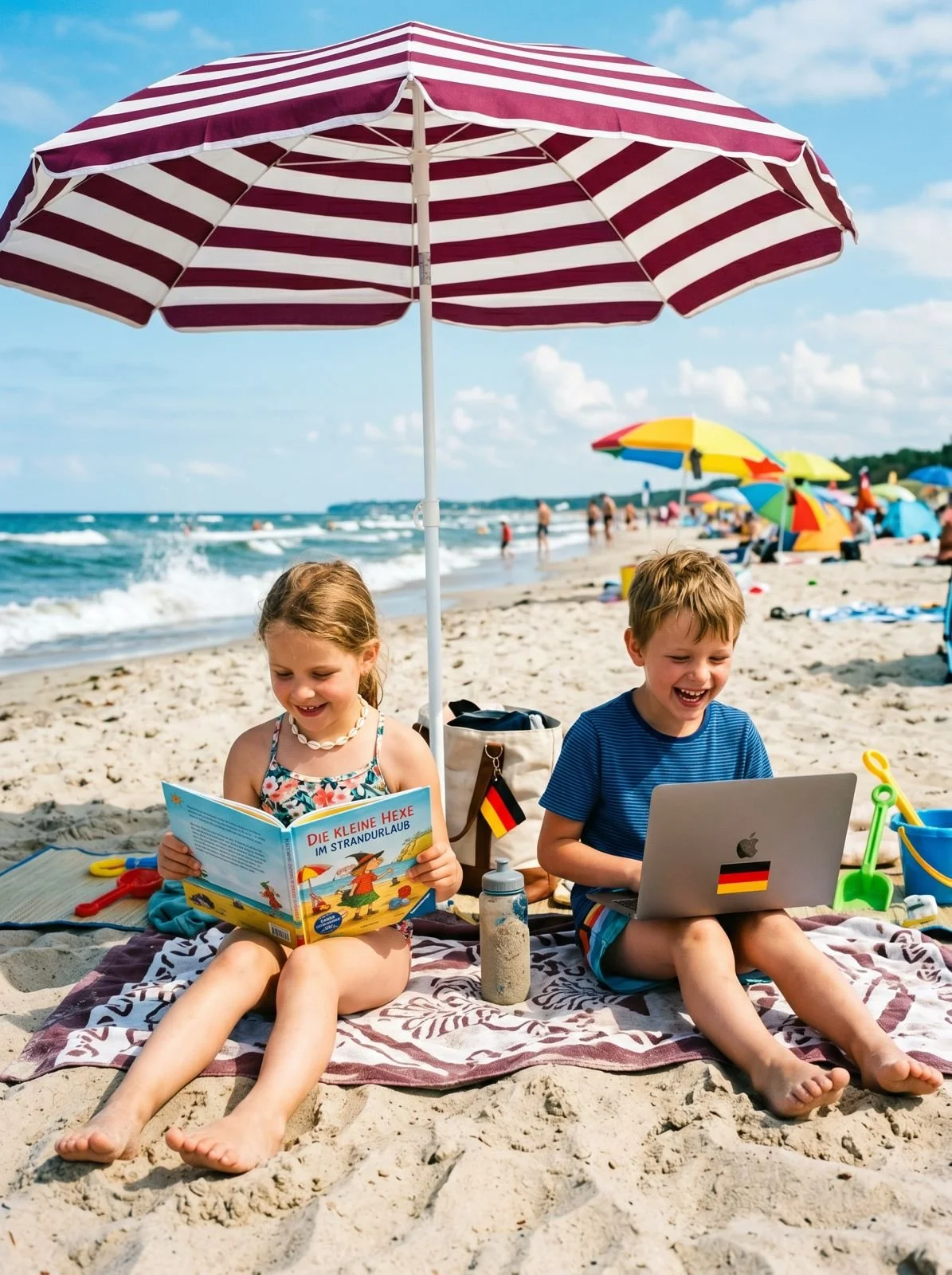
Summer is finally here.
The school year ends, routines disappear, suitcases come out, and suddenly everyone's thinking about beaches, travel plans, and slower mornings.
As a language teacher, I love summer.
But I also know it's the time of year when many bilingual families start worrying:
"Will my child forget their German?"
The good news?
Children don't need hours of worksheets or summer school to maintain a language.
In fact, some of the best language learning happens naturally during summer.
Here are four simple ways to keep bilingual children connected to their language while still enjoying everything that makes summer special.
1. Make Reading Part of the Summer Routine
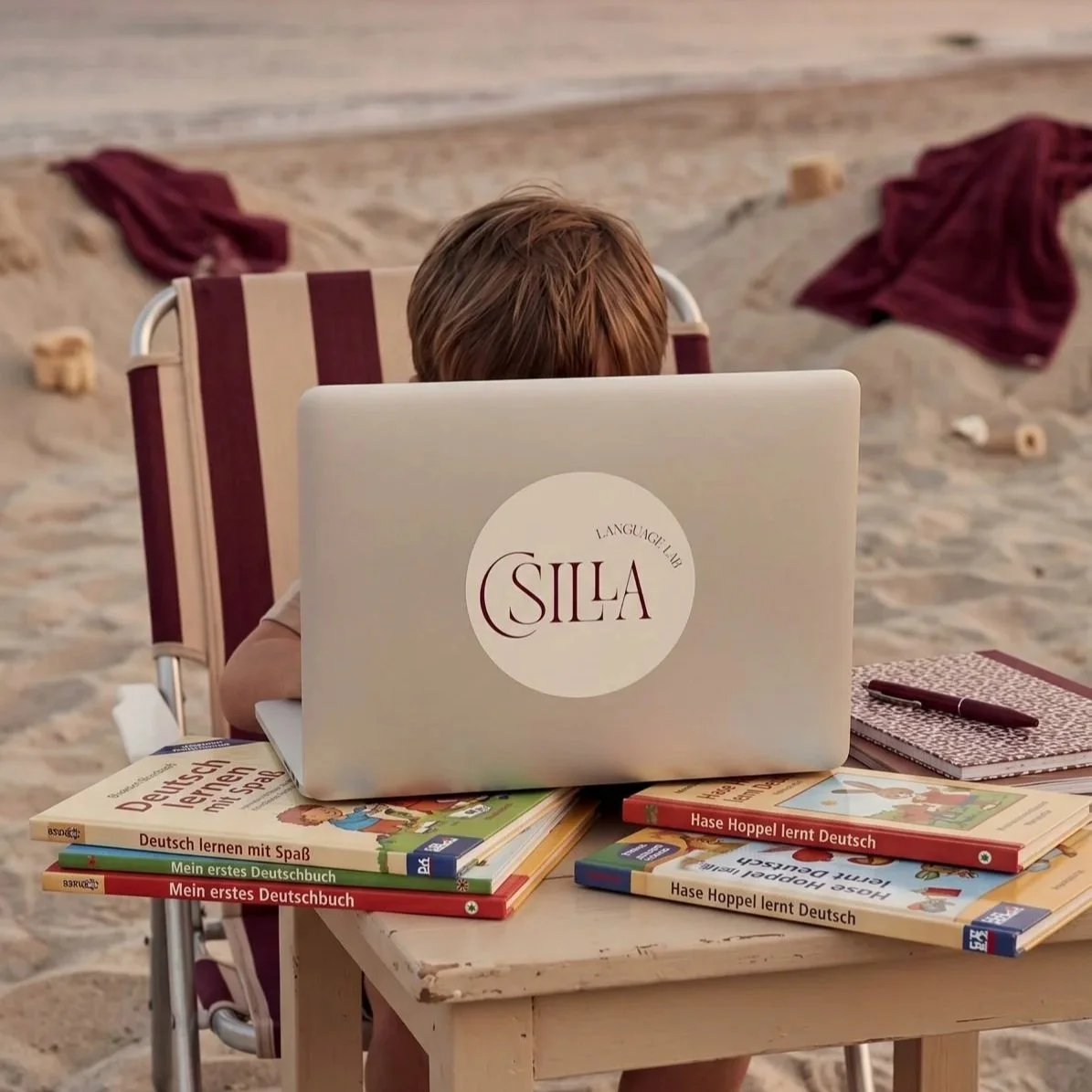
If I could recommend just one thing, it would be this: read.
Reading is one of the easiest ways to maintain vocabulary, grammar, comprehension, and fluency all at once.
The key is choosing books children actually enjoy.
For younger readers, think:
📖 Heidi
📖 Biene Maja
📖 Pumuckl
For older readers:
📖 Gregs Tagebuch
📖 Der Strandurlaub
📖 Der Sommer, als ich schön wurde
2. Let Travel Become the Classroom

One of the reasons I love European summers is that children are constantly exposed to language in real life.
Reading menus.
Ordering ice cream.
Navigating airports.
Hearing different languages.
Asking questions.
Travel creates natural opportunities for children to use language without feeling like they're studying.
And honestly, that's often when the best learning happens.
3. Keep Music and Audiobooks in the Mix
Not every child wants to sit down with a book.
That's okay.
German songs, audiobooks, and podcasts are wonderful ways to keep a language present during summer.
Play them:
🎵 In the car
🎵 During breakfast
🎵 While traveling
🎵 At the beach
Children absorb more than we often realize.
Language exposure doesn't always have to look academic.
4. Focus on Conversation, Not Perfection
One mistake many parents make is turning every interaction into a correction.
Summer is not the time for grammar drills.
It's the time for connection.
Ask questions.
Tell stories.
Talk about your day.
Encourage children to speak without worrying about mistakes.
The goal isn't perfect German.
The goal is keeping the language alive.
Confidence comes first.
Accuracy follows.
The Goal Isn't More Work
Summer should still feel like summer.
Children need time to travel, play, explore, and simply be kids.
The goal isn't to recreate school at home.
The goal is to create small opportunities for language to remain part of everyday life.
Because bilingualism isn't built through one big effort.
It's built through hundreds of small moments.
A bedtime story.
A conversation over breakfast.
A song in the car.
A book by the pool.
And those moments add up.
One summer at a time.
