

Euro Summer: Why European Lifestyle Changes the Way Children Learn

For me as a child, European summers were the most magical time of the year.
They felt endless.
Every summer, we traveled across different parts of Europe, moving between countries, languages, cultures, airports, train stations, lakes, beaches, cafés, and family gatherings. One week I would hear German all day, the next Hungarian, then French, Spanish or Italian somewhere in the background during a travel day or dinner outdoors.
At the time, I didn’t realize how unique that experience was.
I simply thought that was normal childhood.
Only later, after moving to New York and teaching for over a decade, did I begin understanding how deeply those summers shaped the way I learned about the world.
Because some of the most important education children receive doesn’t happen inside classrooms at all.
Sometimes it happens during summer.
In Europe, Children Become Part of Summer Life
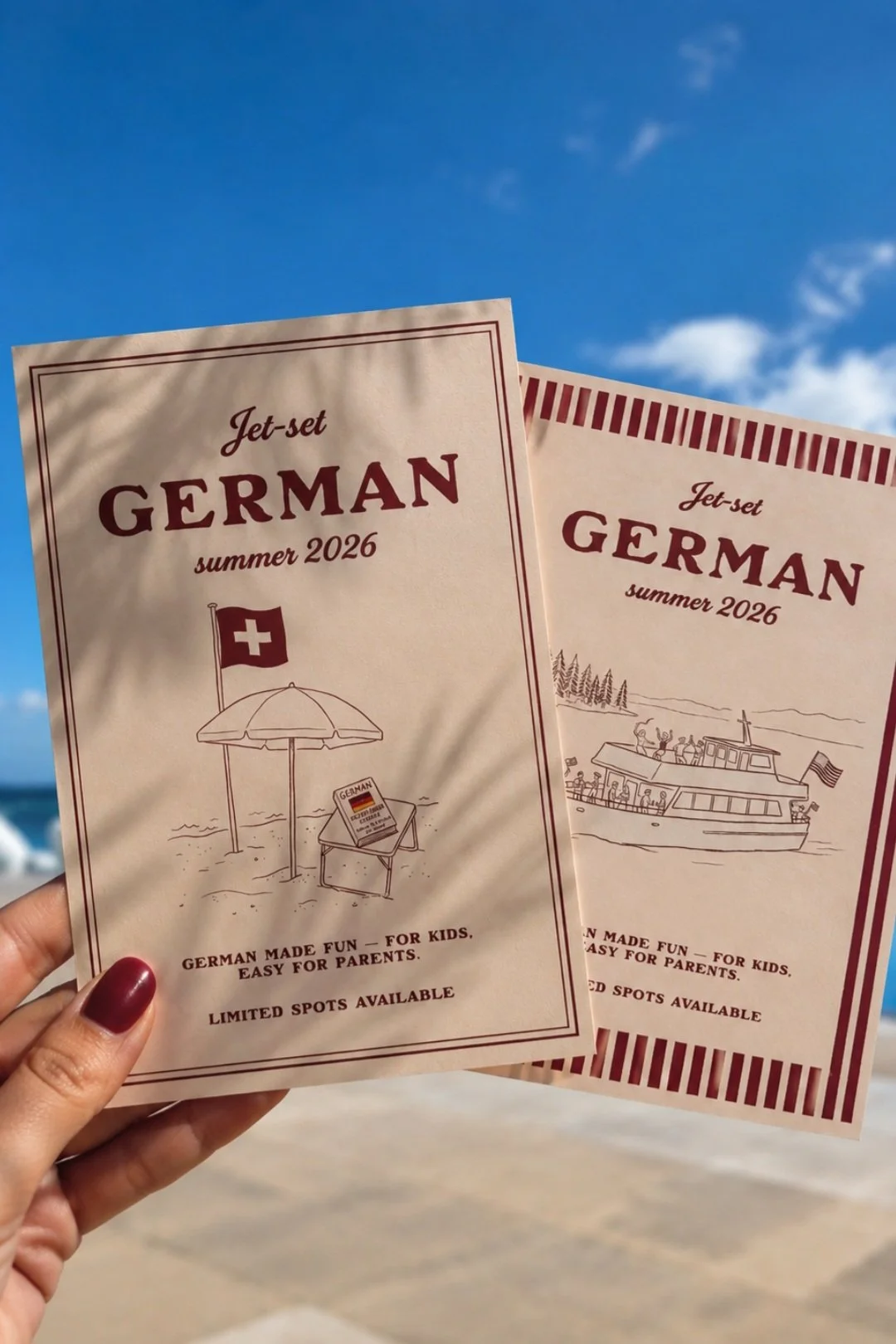
One cultural difference I’ve noticed between the United States and many parts of Europe is how differently summer itself is structured for children.
In America, summer often revolves around activities specifically designed for kids:
summer camps,
sports programs,
organized activities,
and carefully planned schedules.
And there is something beautiful about that too. Summer camps can create friendships, confidence, independence, and unforgettable childhood memories.
But in many parts of Europe, summer often feels less separated into a distinct “children’s world.”
Instead, children become part of adult summer life.
They sit through long dinners at restaurants.
They travel with parents across different countries.
They spend afternoons at cafés, lakes, beaches, markets, museums, and family gatherings.
They overhear adult conversations.
They adapt to unfamiliar environments.
They interact with multiple generations instead of remaining only within peer groups.
In many ways, European summers expose children to everyday life itself.
And I think that subtly changes the way children learn about communication, culture, confidence, and independence.
Summer Becomes Cultural Education
Growing up in Switzerland, summers rarely felt centered around entertainment alone.
They felt immersive.
One day could include hearing three or four different languages on a train ride. Another could involve crossing borders within hours, walking through different cities, or spending entire afternoons outdoors with family long into the evening.
At the time, it simply felt fun.
Now I realize those experiences were quietly shaping adaptability, curiosity, communication skills, and cultural awareness long before I understood what those words even meant.
Children absorb what surrounds them.
And when children grow up exposed to different languages, cultures, transportation systems, social environments, and ways of living, they begin understanding the world from a broader perspective naturally.
That kind of learning cannot always be replicated inside traditional classrooms.
European Summers Naturally Encourage Multilingualism

One thing I especially love about European summers is how naturally multilingualism becomes part of daily life.
A menu might appear in four languages.
A child may hear German, French, Italian, and English in a single afternoon.
Train stations, beaches, airports, and cafés become places of constant cultural exposure.
And because multilingualism feels normal, children often approach language with curiosity instead of fear.
This is something I deeply value now as a language educator.
Many adults are terrified of making mistakes when speaking another language. They wait until they feel “perfect” before even trying. But children raised in multilingual environments often understand something important very early:
communication matters more than perfection.
Language becomes connected to memories, people, food, travel, and experiences.
Not just grammar exercises in textbooks.
The Pace of Summer Shapes Childhood Too
Another thing I’ve come to appreciate about Europe is the slower rhythm of summer itself.
Long outdoor dinners.
Late sunsets.
Walkable cities.
Afternoons at lakes.
Hours spent outside instead of rushing between activities.
Children absorb that pace too.
In many parts of Europe, there is still a stronger understanding that childhood does not need to be constantly optimized every second of the day.
There is room for boredom.
Room for observation.
Room for conversation.
Room for imagination.
And as both an educator and someone who has lived between cultures for most of my life, I’ve become increasingly convinced that emotional well-being and learning are deeply connected.
Sometimes the moments that appear the least educational become the most formative:
ordering ice cream in another language,
watching trains arrive from different countries,
listening to adults converse at dinner tables,
or simply learning how to exist comfortably in unfamiliar environments.
The World Becomes the Classroom

After teaching in New York, building my own online language school, and now teaching from different places around the world, I’ve realized something that continually shapes my philosophy as an educator:
Children learn everywhere.
They learn:
through travel,
through conversations,
through cultural exposure,
through movement,
through independence,
through observation,
and through experiences that quietly expand their understanding of the world.
Perhaps that is what makes European summers feel so different.
Not because children are necessarily studying more,
but because they are experiencing more of life itself.
And maybe that, in its own way, becomes one of the most valuable forms of education.
